
You spent months planning it. You sat through every ID consultation, chose every laminate swatch, approved every cabinet height measurement. Your BTO or resale flat renovation cost you $30,000, maybe $40,000, maybe more. And now — a year or two later — you press your finger against the door of your built-in wardrobe and the laminate dents like paper.
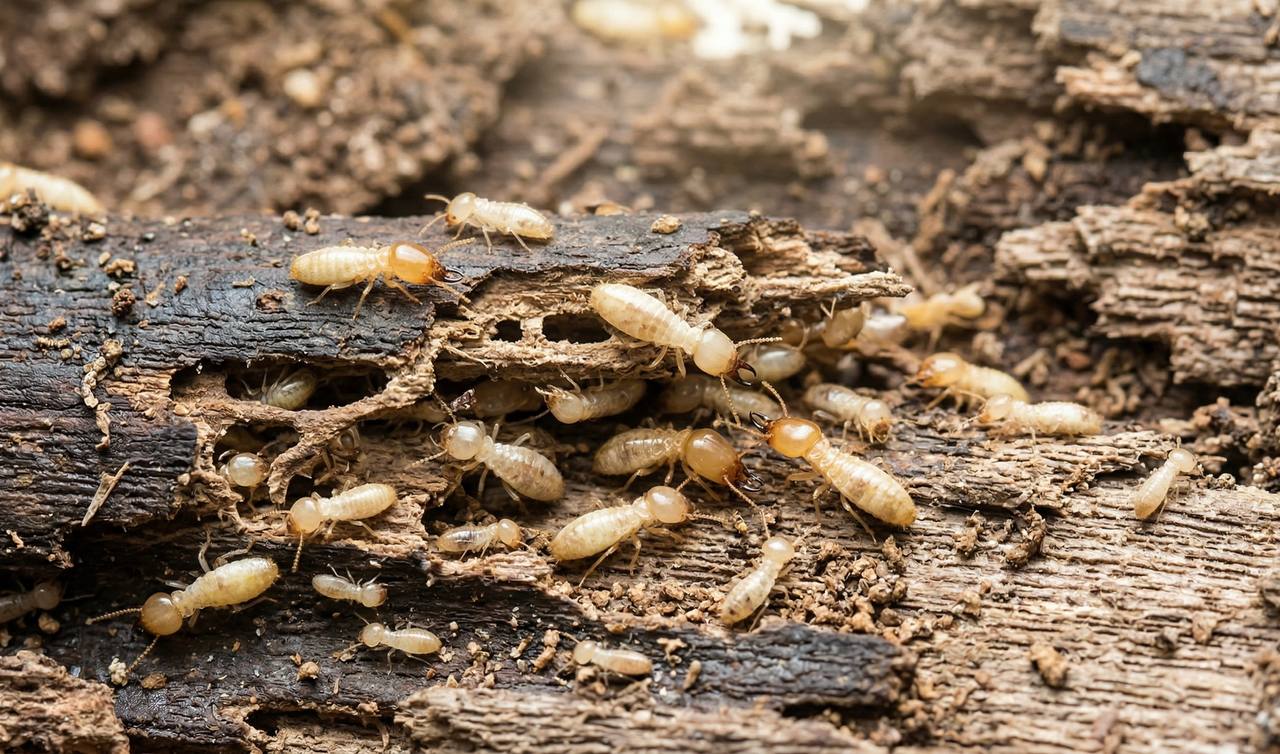
That is not wear and tear. That is termite damage. And by the time you can feel it, the colony has already been working for months.
Why Termites Love Singaporean Built-Ins
Singapore’s renovation culture creates the ideal termite habitat — almost by accident.
Most local carpentry is built from MDF (medium-density fibreboard) and plywood bonded with laminates or melamine. These compressed wood products are rich in cellulose, the organic material termites consume. Unlike solid hardwood, MDF has no natural density or resin to slow them down. They move through it fast.
The bigger problem is placement. Built-in kitchen cabinets share a wall with the wet kitchen or bathroom. Built-in wardrobes often sit flush against a common wall with a neighbour’s bathroom or the building’s service riser. In Singapore’s humidity, these walls retain moisture. Moisture means softer wood fibres. Softer wood fibres mean faster feeding.
Your beautiful carpentry, sealed tight against a warm, humid wall, in a dark enclosed space — it is not just furniture. It is a five-star termite colony.
The Hidden Signs Behind the Laminate
Termites are methodical. They will hollow out the interior of your cabinet door, your shelf panel, or your skirting board while leaving the outer surface untouched for as long as possible. By the time the damage is visible, it is already extensive.
Here is what to look for:
- Bubbling or peeling laminate that looks like moisture damage but feels papery or hollow when pressed. The laminate is delaminating because the MDF underneath has been consumed.
- Cabinet or wardrobe doors that no longer close flush. The frame has been hollowed and has slightly warped, throwing the alignment off.
- Faint clicking or rustling sounds at night, particularly from inside the wardrobe or behind the kickboard panel beneath your kitchen cabinets. Soldier termites tap their heads against the wood to signal the colony.
- Fine sawdust-like pellets (Frass) accumulating inside your wardrobe. If you see dry pellets, you likely have Drywood Termites. If you see damp soil, you have Subterranean Termites. Both are destroying your wood, but they require entirely different professional treatments.
- Mud tubes running along the back panel of a cabinet, the inside of a kickboard, or behind a bathroom vanity. These pencil-thin tunnels of soil and saliva are how subterranean termites travel without exposure to light.
If you are seeing two or more of these signs in the same area, the colony is not small.
The “Bug Spray Mistake”: Why DIY Ruins Your Carpentry
The instinct is completely understandable. You spot a mud tube, you grab a can of off-the-shelf bug spray, you spray the living daylights out of it. Problem solved.
Except it is not. It is worse.
Termites operate as a colony with tens of thousands of workers guided by pheromone trails. When you hit one part of that trail with a repellent spray, the colony does not die — it panics and relocates. The workers abandon the cabinet you just sprayed and begin tunnelling in a new direction. That direction is often your flooring, your skirting boards along the living room, your TV console, or the timber frame inside your wall.
You have not killed the colony. You have scattered it across your home and made it nearly impossible to track.
The queen — the only termite that actually matters — is typically located 30cm to 1.5 metres underground or deep inside a wall cavity. No consumer spray reaches her. While she is alive, the colony regenerates.
How Professionals Save Your Renovation
The goal of professional termite treatment is not just to stop the feeding you can see. It is to eliminate the queen and collapse the entire colony — without tearing your carpentry apart unnecessarily.
At Ezzy Pest Management, our NEA-certified technicians use two critical tools that DIY simply cannot replicate:
Thermal Imaging allows us to scan behind your cabinets, wardrobes, and wall panels for heat signatures and moisture anomalies that indicate active termite movement — without drilling a single hole in your carpentry. We map the colony’s extent before we touch anything.
Termite Baiting Systems work by placing slow-acting bait stations at active trail points. Worker termites carry the bait back to the colony as food, sharing it with other workers and, critically, with the queen. The entire colony is eliminated from the inside out, over a period of weeks. The carpentry you have left is saved.
Acting early is the difference between treating one affected cabinet and replacing an entire room of built-ins.
For a complete breakdown of how we track termite colonies, eliminate the queen, and protect your home long-term — including subterranean species common in Singapore HDBs — check out our Ultimate Guide to Detecting and Preventing Termite Infestations. It covers every treatment method we use and what to expect at each stage.
If your built-ins are showing any of the signs above, do not wait for the laminate to collapse. Call Ezzy Pest Management’s 24-hour helpline for a site assessment. The sooner we find the colony, the more of your renovation we can save.
Ezzy Pest Management | NEA-Certified Termite Specialists | Serving HDBs, BTOs, Condos & Landed Properties Island-wide


