
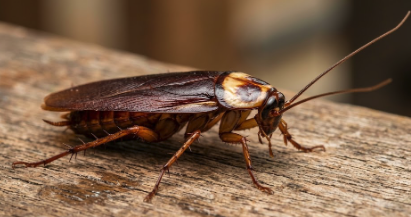
You do not have a cockroach problem because your home is dirty.
That is the first myth to put to rest. Singapore’s persistent heat, humidity, and densely interconnected infrastructure shared drainage systems, common service risers, interlinked void decks create conditions where cockroach activity is a structural reality, not a hygiene failure. Even the most meticulously maintained HDB flat, condo, or food establishment can find itself dealing with an infestation that entered through a drain pipe, a sealed grocery bag, or a gap behind the kitchen cabinet that no one would ever think to check.
What makes cockroaches particularly dangerous is their adaptability. They are among the most evolutionarily resilient insects on the planet, having survived conditions that would eliminate most other species. In Singapore, three species account for the overwhelming majority of infestations across residential and commercial properties. Each behaves differently, harbours in different locations, and requires a different professional response. Treating the wrong species with the wrong method does not reduce the infestation it accelerates it.
This guide covers everything Singapore homeowners and business operators need to know: how to identify the species in your property, the signs that confirm an active infestation, why over-the-counter treatments consistently fail, and how professional intervention works. Each section links to deeper cluster guides for those who need more specific information on their exact situation.
The Three Cockroach Species You Will Encounter in Singapore
American Cockroach (Periplaneta americana) — The Drain Roach
Despite its name, the American Cockroach is one of the oldest species on earth and is thoroughly at home in Singapore’s tropical environment. It is the largest of the three species commonly found here, typically measuring between 35mm and 40mm in length, reddish-brown in colour, with a distinctive pale yellow band around the edge of its thorax.
The American Cockroach is primarily an outdoor and sewer species. It lives and breeds in warm, moist environments — drains, sewage systems, subfloor cavities, and the wet areas beneath commercial kitchen equipment. In residential settings, it enters properties through floor trap drains, gaps around pipe penetrations, and drainage outlets. Because it spends most of its time in the sewer system, it is a significant carrier of bacteria and pathogens that it then tracks across kitchen surfaces, food preparation areas, and storage spaces.
American Cockroaches are strong fliers and are attracted to light, which is why residents often see them in corridors and common areas at night — particularly on lower floors of HDB blocks with direct access to the void deck drainage network. A single sighting indoors is generally a sign of nearby drain activity. Multiple sightings across different rooms suggest the colony has established a harbouring point inside the property.
German Cockroach (Blattella germanica) — The Kitchen Infestation
The German Cockroach is smaller — typically 12mm to 15mm — but it is by far the most problematic species for residential and commercial properties in Singapore. It is pale brown with two distinctive dark stripes running parallel down the back of its pronotum (the plate behind the head). Unlike the American Cockroach, the German Cockroach is almost entirely an indoor species. It does not rely on outdoor drains. It lives, breeds, and feeds entirely within the structure of your home or food establishment.
German Cockroaches prefer warm, humid environments close to food and water — which makes the kitchen the primary infestation zone. They harbour inside cabinet hinges, behind refrigerator motor housings, underneath dishwashers, inside electrical switchboards, and within the narrow gaps between countertop surfaces and wall tiles. In HDB flats, they exploit the shared wall cavities between units to move between neighbouring homes without ever appearing in the open.
What makes German Cockroaches particularly difficult to eliminate is their reproductive rate. A single female can produce an egg capsule containing 30 to 40 eggs every few weeks, and nymphs reach reproductive maturity in as little as six weeks under Singapore’s temperature conditions. A modest infestation of 50 cockroaches can become a colony of several thousand within a single quarter if left untreated. They are also the species most commonly associated with food contamination in F&B establishments and the species most likely to trigger NEA inspection and enforcement action.
Why German Cockroaches Are the Hardest to Eliminate — And Why DIY Gel Baits Fail— For a full breakdown of why German Cockroaches are in a different category from every other species, and what professional-grade treatment actually involves, read our dedicated guide.
Brown-Banded Cockroach (Supella longipalpa) — The Hidden One
The Brown-Banded Cockroach is the least commonly discussed but frequently the most surprising to discover. It is similar in size to the German Cockroach at around 11mm to 14mm, but it prefers drier, warmer environments — which means it does not concentrate in the kitchen. Brown-Banded Cockroaches harbour in bedrooms, living rooms, behind picture frames, inside electrical appliances, within the binding of stored books, and behind loose wallpaper or skirting board gaps.
They are named for the two light brown bands that cross their dark brown wings. Unlike German Cockroaches, they are more active and tend to scatter widely when disturbed. Because they live away from food preparation areas, they are often discovered later than the other species — by which point, a dispersed colony can have established harbouring points across multiple rooms.
Brown-Banded Cockroaches are a particular concern in properties with a lot of stored items — storerooms, home offices, and walk-in wardrobes — and in commercial settings with server rooms or electronics storage areas where heat output creates a consistently warm microenvironment.
Signs of an Active Cockroach Infestation
Cockroaches are primarily nocturnal and actively avoid light, which means that by the time you regularly see them during the day, an infestation is usually already significant. Earlier detection is possible, but it requires knowing what to look for.
Droppings. Cockroach droppings are one of the most reliable indicators of an active infestation and are species-specific. American Cockroach droppings are cylindrical with ridged edges, approximately 2mm long. German Cockroach droppings are much smaller — resembling dark specks or ground black pepper — and accumulate in dense clusters near harbouring sites, particularly inside cabinet hinges, behind appliance motors, and along the underside of shelving.
Egg Capsules (Oothecae). Cockroaches carry their eggs in a hardened protein case called an ootheca. American Cockroach oothecae are dark reddish-brown, approximately 8mm long, and often found near drains or behind stored items in storerooms. German Cockroach oothecae are smaller and paler, and because females carry them until just before hatching, you are more likely to find shed cases than live ones. Locating an ootheca confirms active reproduction — not just occasional foraging.
Musty or Oily Odour. A significant cockroach colony produces a recognisable pheromone-based odour that is variously described as musty, oily, or slightly sweet. It is particularly noticeable in enclosed spaces — inside kitchen cabinets, behind refrigerators, or in storerooms with poor ventilation. If you open a cabinet and notice an unusual smell that does not correspond to anything stored inside, treat it as a red flag.
Smear Marks. In areas with moisture, cockroaches leave irregular brown smear marks along the surfaces they habitually travel — the bottom edges of cabinet doors, the underside of countertop overhangs, and along the wall-floor junction near drains. These marks are caused by their bodies and are distinct from food stains.
Shed Skins. Cockroaches moult multiple times as they develop from nymph to adult. Finding shed exoskeletons — translucent, hollow shells in the shape of a cockroach — near harbouring sites indicates an established colony that has been present long enough for multiple generations to develop.
Cockroaches in HDB Kitchens: Where They Hide and How to Find Them — For a room-by-room guide to locating and confirming cockroach harbouring sites in residential kitchens, read our dedicated guide.
Why Over-the-Counter Treatments Fail
The consumer pest control market is saturated with cockroach sprays, gel baits, traps, and powders. Most of them produce short-term results at best and actively worsen infestations at worst. Understanding why requires understanding how cockroach colonies behave.
Sprays disperse, not eliminate. Consumer-grade aerosol sprays are repellent-based. When applied directly to cockroaches or their trails, they do not kill the colony — they trigger a dispersal response. Cockroaches abandon the treated area and relocate deeper into the wall cavity, to a neighbouring room, or to an adjacent unit. Repeated spraying in the same location trains the surviving population to avoid that area entirely while the infestation continues to expand elsewhere in the property.
Gel baits fail without professional placement. Gel bait products are a legitimate treatment method when applied correctly by a trained technician. The consumer versions fail for two reasons: placement and formulation. Effective gel baiting requires identifying the precise harbouring sites and travel routes of the colony, then placing bait at the correct intervals along those routes. Consumer gel is typically applied at visible locations — usually nowhere near the actual harbouring core. Additionally, over time, cockroach populations in heavily treated areas can develop bait aversion, a behavioural adaptation that causes them to detect and avoid the bait entirely. Professional-grade formulations rotate active ingredients specifically to counter this.
Foggers and bombs scatter the problem. Total-release foggers — devices that fill a room with pesticide vapour — are perhaps the most counterproductive DIY tool available. They do not penetrate the harbourage sites where cockroaches actually live, they leave a chemical residue on food preparation surfaces, and the dispersion of cockroaches they trigger can spread an infestation from one room or unit to an adjacent property.
How Professional Cockroach Control Works
Effective cockroach elimination is a structured process, not a single product application. Ezzy Pest Management’s NEA-certified technicians use an Integrated Pest Management approach calibrated to the specific species, infestation severity, and property type.
Species Identification and Harbouring Site Mapping. Before any treatment, our technicians conduct a thorough inspection to identify the cockroach species present, locate the primary and secondary harbouring sites, and map the travel routes the colony is using. Treatment applied without this information is guesswork. This inspection phase is what separates professional intervention from consumer spray-and-hope.
Professional-Grade Gel Baiting. For German Cockroach infestations — the most common residential scenario — we deploy professional-strength gel bait at precisely mapped harbouring points. The formulation is designed for palatability to cockroaches and contains a slow-acting compound that allows foraging workers to return to the harbourage and transfer the active ingredient to other colony members before dying. This cascade effect reaches cockroaches that never leave the harbourage and would never contact a surface spray.
Residual Chemical Treatment. For American Cockroach activity linked to drains and sewer ingress, our technicians apply residual termiticide formulations to drain surrounds, pipe penetrations, and floor trap covers. These treatments remain active on treated surfaces for an extended period, killing cockroaches that pass through those entry points before they can establish a harbouring site inside the property.
Insect Growth Regulators (IGRs). IGRs are professional tools that disrupt the cockroach reproductive cycle by preventing nymphs from developing into reproductive adults. Applied in conjunction with baiting and residual treatment, they break the breeding cycle and prevent population recovery between treatment visits.
Follow-Up and Warranty. Every Ezzy treatment programme includes a structured follow-up inspection schedule and is backed by our standard 2-month warranty. If cockroach activity is detected in treated areas within the warranty period, our team returns to assess and retreat at no additional cost.
Cockroach Control for F&B Businesses and Hawker Stalls: What NEA Compliance Actually Requires — If you operate a food business, café, or hawker stall, read our dedicated guide on the specific treatment standards required for NEA compliance and how to maintain them between inspections.
High-Level Prevention: Removing the Conditions That Attract Cockroaches
No pest control treatment provides indefinite protection without addressing the environmental conditions that attract and sustain cockroach populations. The following measures significantly reduce the risk of reinfestation after professional treatment.
Seal every drain and pipe penetration. Floor trap covers should be checked and replaced if cracked or poorly fitting. Gaps around pipe penetrations through walls and floors — particularly under the kitchen sink and behind the washing machine — should be sealed with a waterproof compound. These are the primary structural entry points for American Cockroaches from the building’s drainage network.
Eliminate food and moisture sources. Cockroaches need three things to establish a colony: warmth, moisture, and a food source. In a kitchen, that means ensuring food is stored in sealed containers rather than open packaging, that spills and grease deposits are cleaned promptly from behind appliances and inside cabinet hinges, and that the drip tray beneath the refrigerator is emptied and cleaned regularly. Cockroaches can sustain themselves on residues invisible to the human eye.
Reduce clutter in storage areas. Storerooms, utility spaces, and areas beneath beds or sofas that accumulate cardboard boxes, old newspapers, and stored items provide ideal undisturbed harbouring conditions for Brown-Banded Cockroaches. Reduce clutter, store items in sealed plastic containers rather than cardboard, and inspect stored goods periodically for signs of activity.
Schedule professional inspections proactively. A professional inspection conducted before you see cockroaches is dramatically less expensive than one conducted after a colony is established. For HDB units on lower floors with drain access, and for all F&B establishments, a scheduled professional inspection every six months provides the early-detection capability that visual monitoring alone cannot.
Protect Your Property Before the Infestation Protects Itself
Cockroaches are extraordinarily good at surviving amateur intervention. Every week an infestation goes untreated is another generation of eggs hatched, another harbouring site established, and another round of DIY treatment that trains the surviving population to be more resistant to it.
Ezzy Pest Management’s NEA-certified team serves HDBs, condominiums, landed properties, and commercial food establishments across Singapore. Our inspection-first approach, professional-grade treatments, and standard 2-month warranty ensure you are not just reducing the visible population — you are eliminating the colony.
Call our 24-hour emergency helpline to schedule an inspection. The sooner we identify the species and locate the harbouring site, the faster and more completely we can resolve the infestation.
Ezzy Pest Management | NEA-Certified Pest Control Specialists | Serving HDBs, BTOs, Condos, Landed Properties & F&B Establishments Island-wide


