
There is a version of this article that tells you to keep your kitchen clean and take out the rubbish every night.
You already know that. This is not that article.
Singapore’s cockroach problem is not primarily driven by dirty homes. It is driven by the structural characteristics of dense, interconnected housing — shared drains, common service risers, wall cavities that run between units — combined with a climate that keeps cockroach populations biologically active every single day of the year. Prevention in this environment means more than cleanliness. It means systematically removing the structural entry points, moisture sources, and harbouring opportunities that allow cockroaches to establish a colony inside your property.
This checklist is organised by zone. Work through it once thoroughly, then use it as a quarterly maintenance reference. Every item on it addresses a specific biological need that cockroaches are exploiting. Understand the reason behind each step, and it stops feeling like housekeeping and starts feeling like what it actually is — pest management.
Zone 1: Kitchen — The Highest-Risk Room in the Home
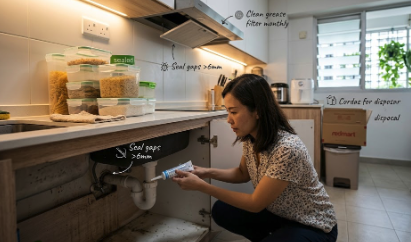
☐ Seal every gap around pipe penetrations under the sink
The cabinet beneath your kitchen sink is where the building’s drain network connects to your unit. Every gap around a pipe where it passes through the cabinet floor or back panel is a viable cockroach entry point. Seal all gaps larger than 6mm with a waterproof silicone compound. Check this seal every six months — silicone degrades and can be disturbed during pipe repairs.
☐ Replace cracked or ill-fitting floor trap covers
The floor trap in your kitchen (and bathroom) is the most direct entry route for American Cockroaches from the building’s drainage system. Lift the cover and inspect it — cracks, warping, or a poor fit against the floor surface are all entry gaps. Replacement floor trap covers are inexpensive and available at hardware stores island-wide. This is one of the highest-ROI prevention steps available.
☐ Clean behind and beneath the refrigerator every three months
The compressor area at the rear of your refrigerator accumulates grease, dust, and food debris that cockroaches feed on, combined with consistent warmth from the motor — ideal harbouring conditions. Pull the refrigerator away from the wall quarterly, clean the rear panel area, and empty and clean the drip tray beneath the compressor. A clean motor housing is significantly less attractive as a harbouring site.
☐ Store all dry food in sealed, hard-sided containers
Open packaging — biscuit bags clipped shut, partially open rice bags, cereal boxes folded over at the top — is not an effective barrier. Cockroaches can detect food through packaging and will chew through thin plastic and cardboard to access it. Transfer dry goods into sealed containers with locking or screw-top lids. This eliminates the primary food source that sustains a colony once it has established inside the kitchen.
☐ Clean grease from the rangehood filter and interior monthly
Grease accumulation inside the rangehood is one of the richest and most overlooked food sources in any kitchen. At a minimum, remove and degrease the filter panels monthly. Wipe down the interior housing walls at the same time. A grease-free rangehood removes a significant attractant from the highest-traffic area of your kitchen.
☐ Remove cardboard boxes immediately after unpacking
Cockroaches and their eggs are routinely transported inside cardboard boxes — from supermarkets, wholesale suppliers, food delivery platforms, and moving cartons. Cardboard also provides an ideal harbouring material: it is warm, absorbs moisture, and offers physical contact on multiple sides. Unpack deliveries immediately and dispose of or break down cardboard boxes the same day. Do not store cardboard in kitchen cabinets or the storeroom long-term.
☐ Wipe down cabinet hinge channels when cleaning
The recessed channel inside a concealed cabinet hinge is one of the most common German Cockroach harbouring sites in an HDB kitchen. It requires only a narrow cotton bud or small brush to clean effectively. Make this part of your regular wipe-down routine — a clean hinge channel is an unattractive harbouring site.
Zone 2: Bathroom and Laundry — The Moisture Zone
☐ Ensure your floor trap cover seats flush to the floor
The bathroom floor trap is subject to the same risk as the kitchen. In older HDB units, years of cleaning and light wear can cause the surrounding tile grout to erode, leaving a gap between the trap cover and the floor surface. Check the fit and regrout if necessary.
☐ Fix every leaking pipe, tap, and showerhead promptly
Cockroaches require water to survive and are highly sensitive to moisture gradients. A dripping tap beneath the vanity, a weeping joint behind the washing machine, or a slow leak at the base of the toilet creates a moisture source that draws cockroaches toward that area. The repair cost of a dripping tap is negligible compared to the pest management cost of the infestation it can sustain.
☐ Do not leave standing water in buckets or containers overnight
This applies to any container — a pail left with water after mopping, a bucket under a slow drip, a pet water bowl in the laundry area. Standing water overnight provides a consistent drinking source for any cockroaches active in the building’s drainage network. Empty containers when not in use.
☐ Seal the gap behind the washing machine water connection
The pipe connections at the back of the washing machine typically pass through a hole in the wall or cabinet back panel. This penetration is rarely sealed after installation and connects your laundry area directly to the wall cavity. Inspect it and seal any visible gap with silicone compound.
Zone 3: Storeroom and Living Areas — The Overlooked Zones
☐ Replace cardboard storage boxes with sealed plastic containers
Storerooms filled with cardboard boxes provide ideal conditions for Brown-Banded Cockroach colonisation — dark, undisturbed, and with ample harbouring material in the cardboard itself. Replace cardboard with sealed plastic storage containers. This one change removes both the harbouring material and the food source for any cockroach species exploring the storeroom.
☐ Pull stored items away from the wall and inspect quarterly
Cockroaches colonise storerooms precisely because they are undisturbed. A quarterly inspection — pulling stored items away from the walls and checking the floor and wall junction for frass, oothecae, or shed exoskeletons — catches early activity before it becomes an established colony. Five minutes per quarter is all it takes.
☐ Inspect secondhand furniture and appliances before bringing them inside
Secondhand furniture, refurbished appliances, and items sourced from online marketplaces are a common introduction route for German Cockroach infestations. Before bringing any used item inside, inspect all enclosed cavities, hinge points, and motor housings with a torch. If you find frass or oothecae, do not bring the item inside — the risk of introduction far outweighs the inconvenience.
☐ Check the skirting board junctions along the kitchen and storeroom walls
In resale HDB flats, the skirting board-to-floor junction is often imperfectly sealed — particularly in areas that have been repainted or had flooring replaced. Run your hand along the base of the skirting in the kitchen and storeroom. Any gap where the skirting lifts from the floor surface is a travel route and harbouring point. Seal with a clear silicone bead.
When Prevention Is Not Enough
This checklist eliminates the conditions that attract and sustain cockroaches. It does not eliminate an established infestation.
If you have worked through every item above and are still seeing cockroach activity, the colony is already inside a harbouring site that environmental changes alone will not reach. At that point, professional intervention — species identification, harbouring site mapping, and targeted professional-grade treatment — is the appropriate next step.
The good news is that a property where this checklist has been applied is a property where professional treatment works faster and lasts longer. When the environmental conditions that sustained the colony are removed, there is nothing to draw a replacement population back in once the existing colony has been eliminated.
For a complete guide to how cockroach infestations are professionally diagnosed and treated across all property types in Singapore, read our Ultimate Guide to Cockroach Control in Singapore.
If your infestation is in the kitchen and you want to understand exactly where cockroaches are harbouring before your professional visit, read our guide: Cockroaches in HDB Kitchens: Where They Hide and How to Find Them.
Ezzy Pest Management’s NEA-certified technicians are available 24 hours a day for site assessments across HDB flats, condominiums, and landed properties island-wide. If the checklist has confirmed that an infestation is already established, call our 24-hour emergency helpline — we will identify the species, locate the harbouring sites, and apply the right treatment from the first visit, backed by our standard 2-month warranty.
Ezzy Pest Management | NEA-Certified Pest Control Specialists | Serving HDBs, BTOs, Condos, Landed Properties & F&B Establishments Island-wide


